
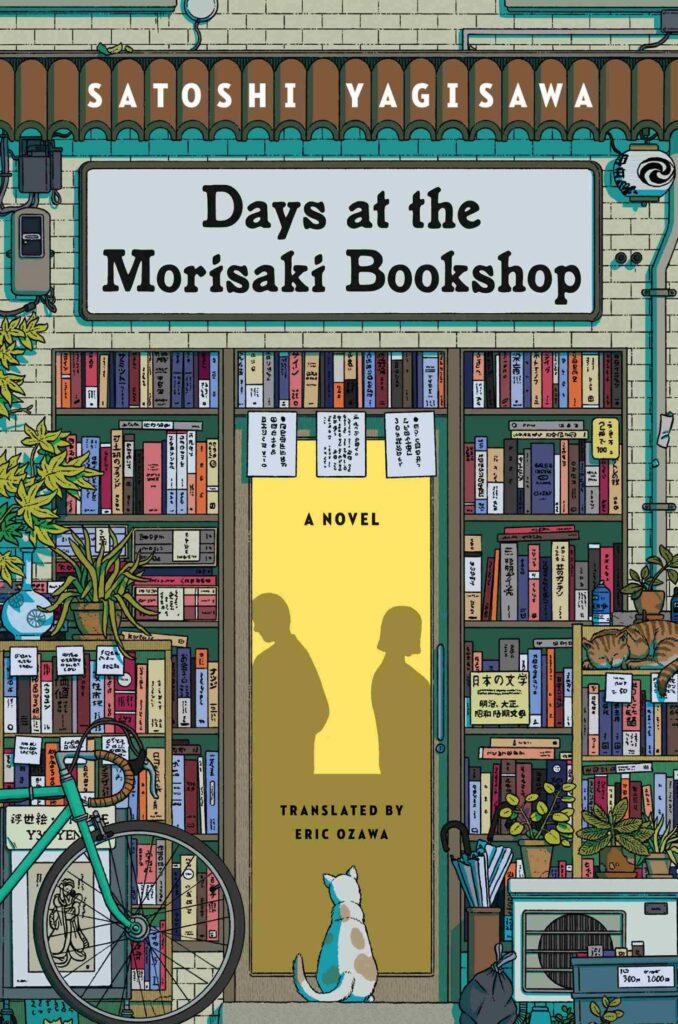
Reading Days at the Morisaki Bookshop feels like borrowing a quiet room in someone else’s life for a few days. Nothing in it tries to impress you. The sentences don’t rush. The characters don’t perform. The story just exists, the same way a small neighborhood bookstore exists, unnoticed by most people, essential to a few.
The bookshop in the novel, the kind of place where stacks are slightly uneven and you’re never sure if the book you want is organized or just hiding. You can almost imagine running your finger along the spines, reading random titles, forgetting why you came in the first place.
Satoshi Yagisawa writes people the way they actually are when nobody is watching. Conversations drift. Thoughts repeat. Emotions don’t arrive with background music or big realizations. The main character doesn’t suddenly “fix” her life; she slowly becomes comfortable sitting inside it again. That slowness is the entire charm. You’re not waiting for a twist. You’re watching someone breathe easier page by page.
What stays after finishing isn’t the plot. It’s the mood of being surrounded by books without feeling pressured to read all of them. The sense that a day can pass quietly and still count as a full day. The novel gives the strange comfort of realizing that ordinary time is not wasted time.
When you close Days at the Morisaki Bookshop, it doesn’t really feel finished. It feels paused. The world outside the pages comes back, but a small part of you wants to stay between those shelves a little longer, just to stretch that for a few more hours.
I caught myself not wanting that atmosphere to dissolve, not wanting the characters to become “a book I read.” So instead of letting it end, I reached straight for More Days at the Morisaki Bookshop, not out of urgency to know what happens next, but out of reluctance to leave that space.
Some stories you continue because they’re exciting. This one you continue because it felt like somewhere you could sit without being asked anything, and once you find a place like that, you don’t close the door too quickly.